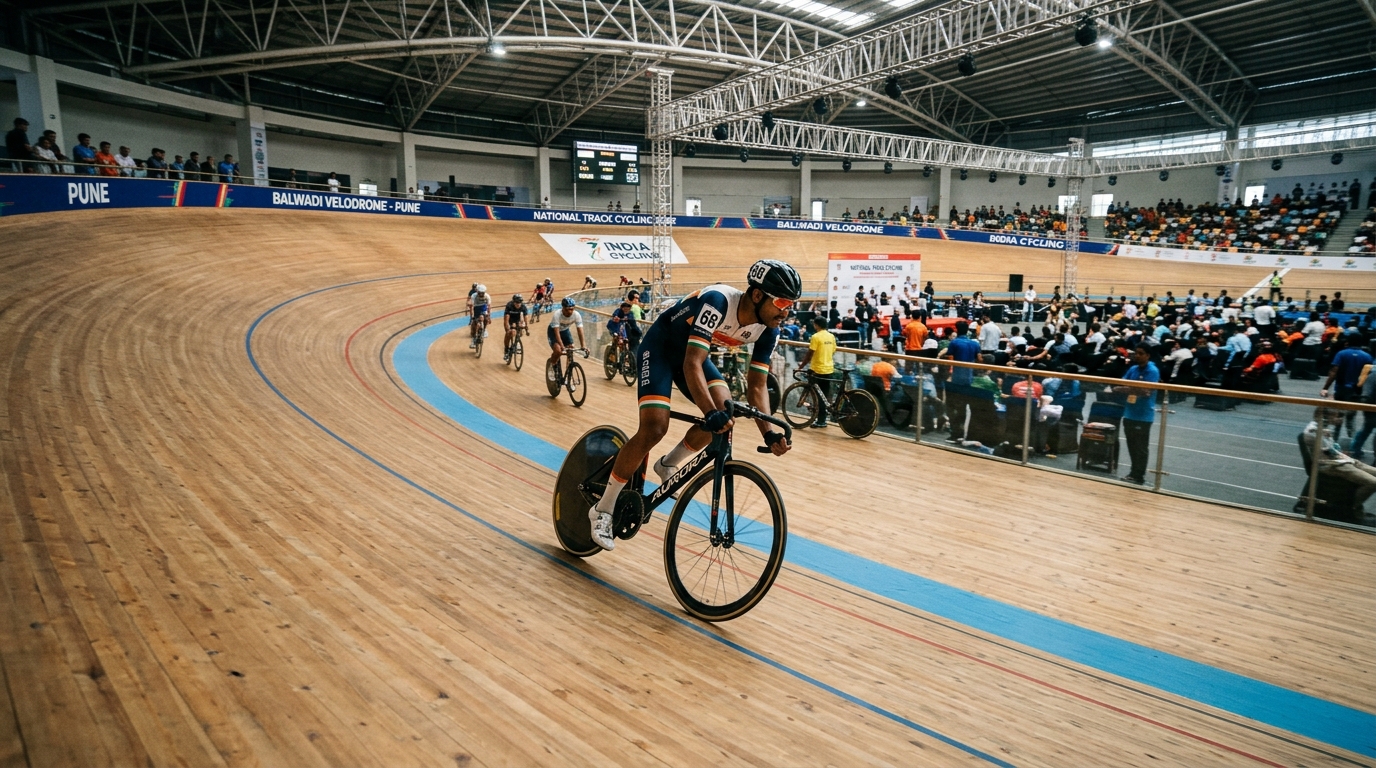
Siberian Pine Surface and Steep 42-Degree Banking
Constructed from precision-laid tongue-and-groove Siberian pine timber, the Balewadi track features steep 42-degree banked turns that allow sprint cyclists to reach velocities exceeding 70 kilometers per hour.
The recent restoration meticulously resurfaced the timber deck with specialized polyurethane traction coats, eliminating microscopic surface undulations to optimize rolling resistance for carbon-fiber track bikes.
Millisecond Digital Transponder Timing Systems
The track now incorporates Swiss-certified optical laser start-finish gates and wireless bicycle frame transponders that measure lap split times down to 1/1000th of a second.
High-definition video cameras record aerodynamic rider tuck angles and cadence variations, providing junior national athletes with Olympic-caliber data to refine their track pursuit and keirin strategies.
Operational Engineering and Metrological Telemetry: Field Metrics
Detailed field investigations conducted across Western Maharashtra reveal that rigorous standardization and telemetry protocols form the operational backbone of this initiative. Modern instrumentation and automated data loggers continuously monitor key operational variables, minimizing human error and providing real-time data feeds to regional command centers.
Under standard operational procedures, field technicians conduct periodic multi-point calibrations against certified reference standards. This continuous measurement feedback loop ensures that environmental, structural, and mechanical tolerances remain strictly within regulatory thresholds established by state monitoring boards.
Statutory Governance, Institutional Audits, and Workforce Compliance
Compliance frameworks governing these operations are strictly aligned with Maharashtra state guidelines and central statutory mandates. Regular third-party technical and environmental audits are performed by accredited engineering agencies to verify structural stability, workplace safety standards, and environmental mitigation protocols.
Furthermore, structured vocational training modules have been established for regional technical personnel, ensuring that operators and supervisory staff are fully qualified to maintain advanced equipment without external dependency. This institutional capacity building represents a critical asset for long-term operational resilience.
Socio-Economic Multipliers and Regional Development Horizons
Beyond immediate operational and infrastructure dividends, the initiative provides substantial economic multipliers for surrounding communities. Local manufacturing workshops, specialized material suppliers, and maintenance technicians experience direct commercial growth through supply-chain formalization.
Community representatives and regional industry associations emphasize that continued state capital investment in these modernized systems fosters long-term civic stability. By bridging traditional craftsmanship with precision engineering, the project establishes a robust benchmark for sustainable regional advancement across Western India.